Socialization and Play
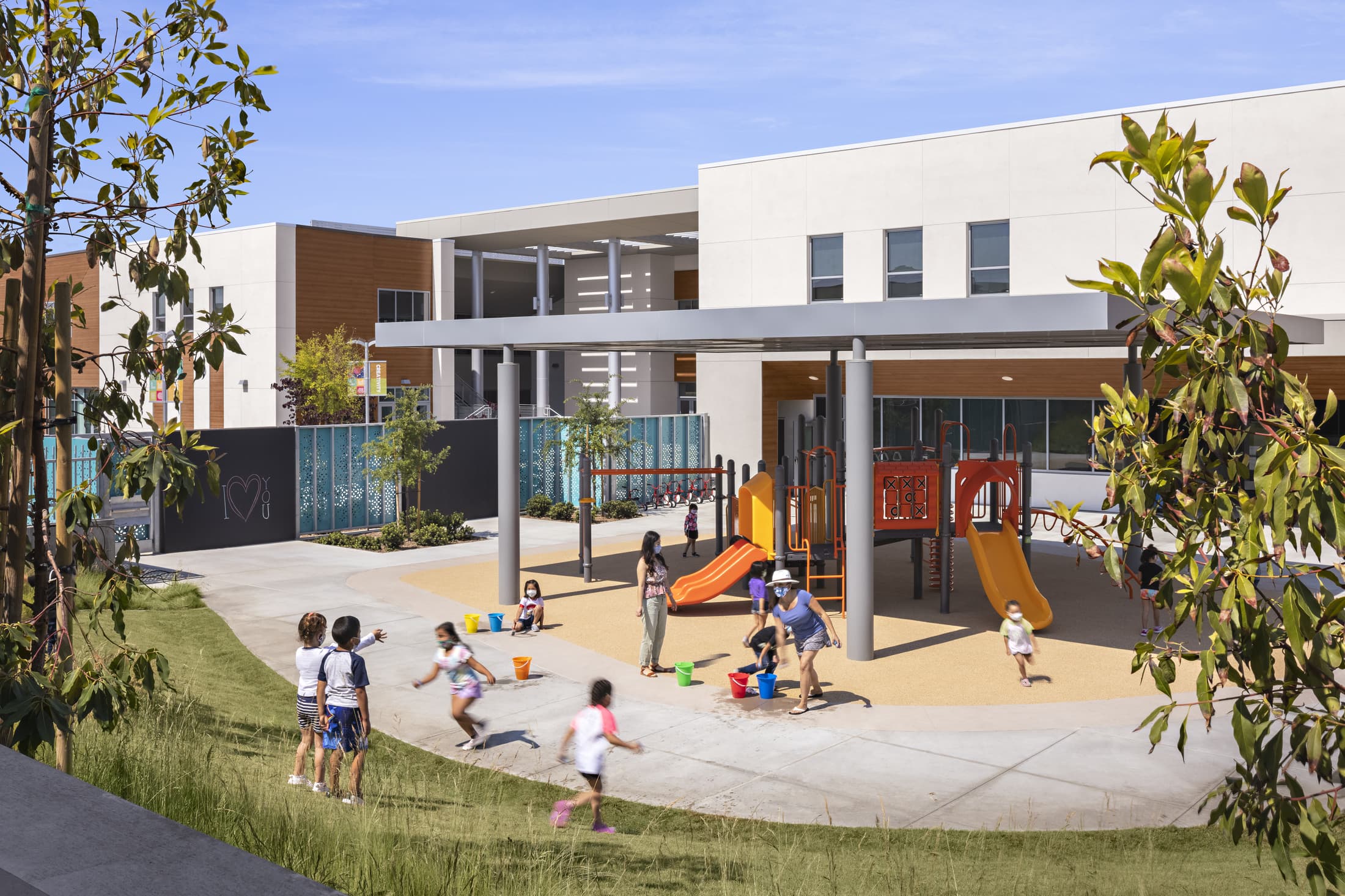
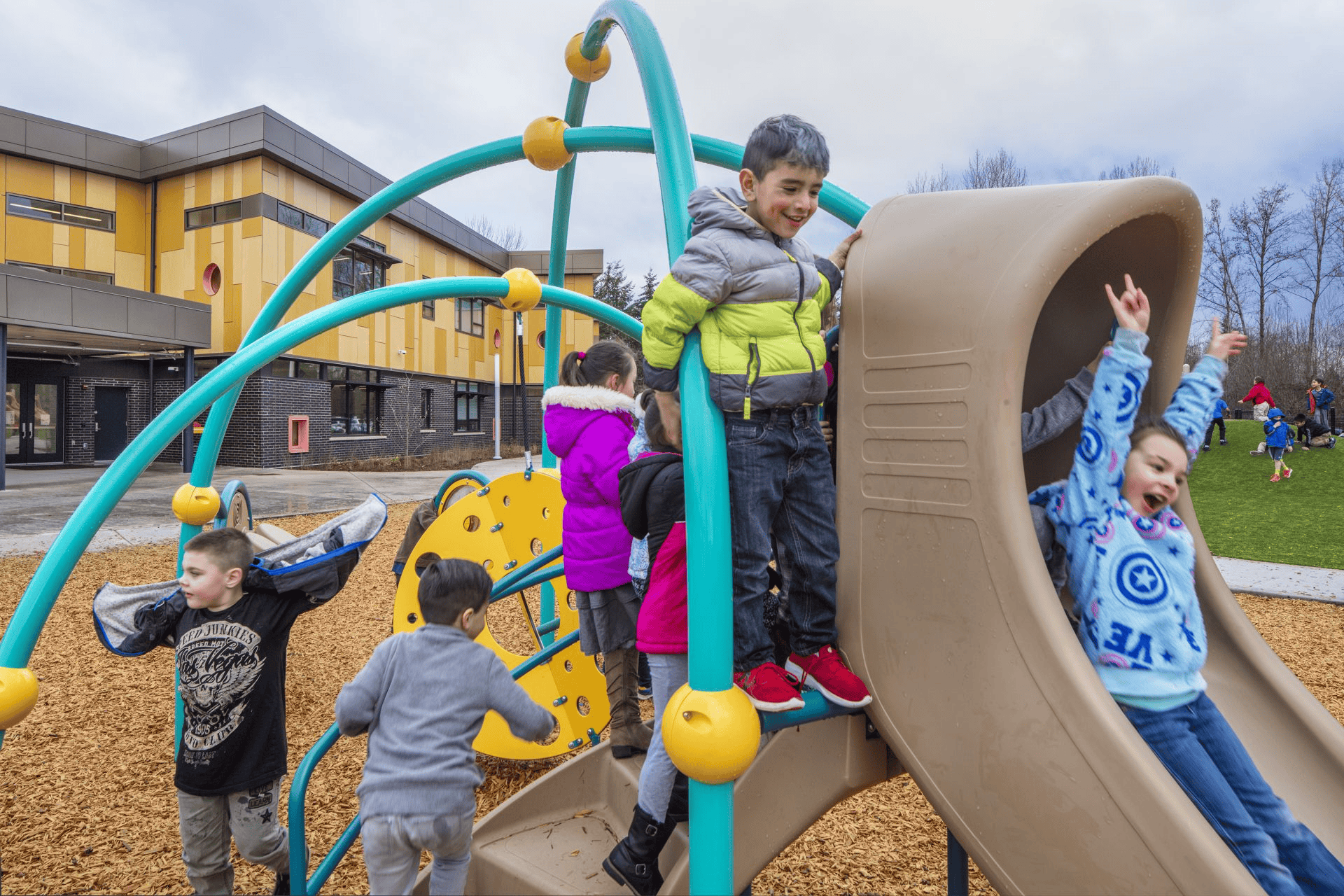
A crucial balance to direct instruction during a student's day is play and socialization. Access to interactive and creative outdoor space allows for play-based learning. Accessible playgrounds appropriately sized for students as well as accessible non-active spaces shall be provided so areas are universal for everyone. Easy supervision from single vantage points and appropriate playground materials will uphold a safe play environment.
For younger student play areas, provide a variety of accessible play structures that can be used in all weather conditions. Encourage “play” areas for older students as well via tables for card games, basketball hoops, or lawns for frisbee throwing and relaxing.
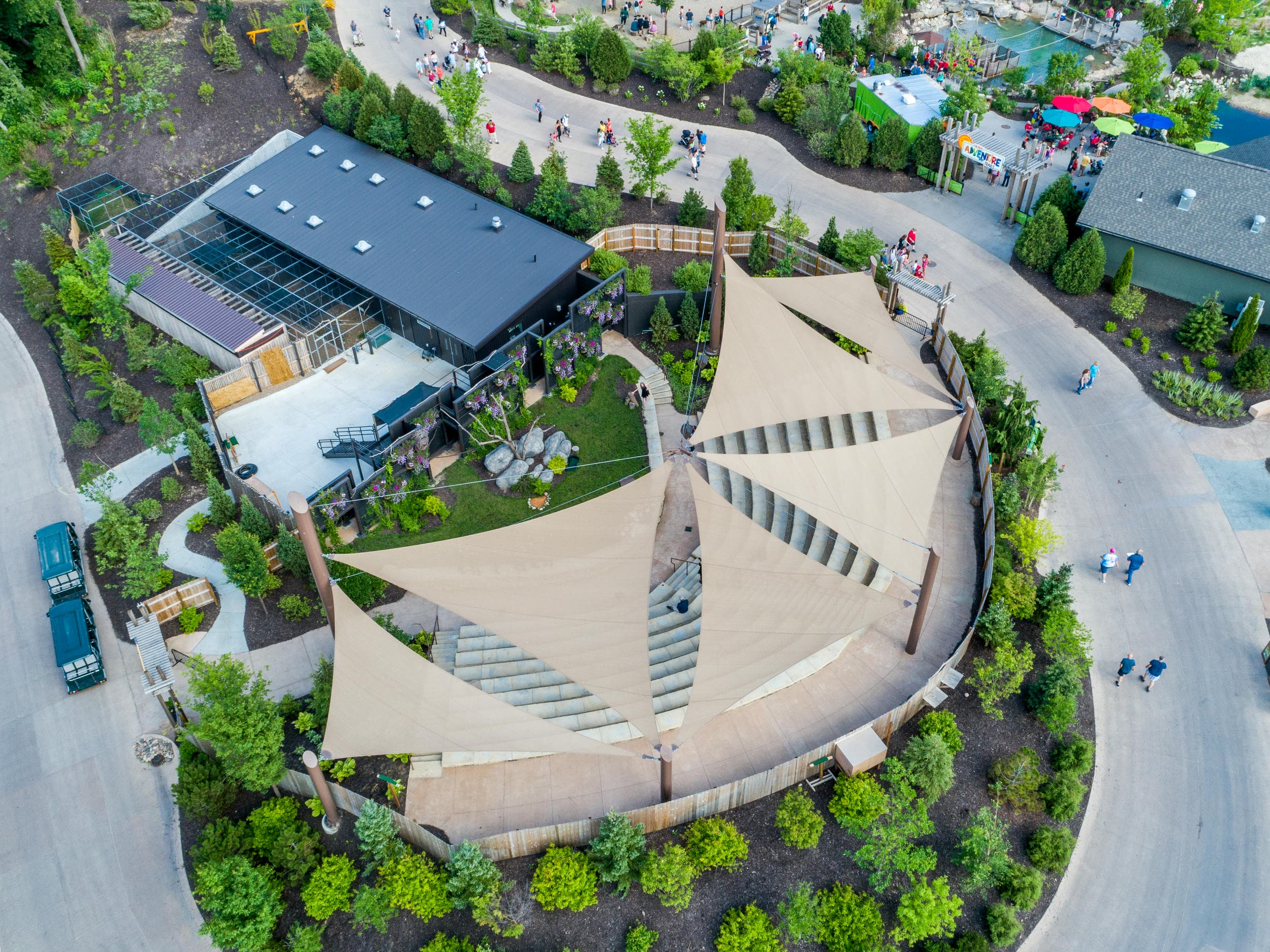
Provide shading at all play structures as well as outdoor learning areas where possible. Discourage use of materials that get too hot or are not accessible.
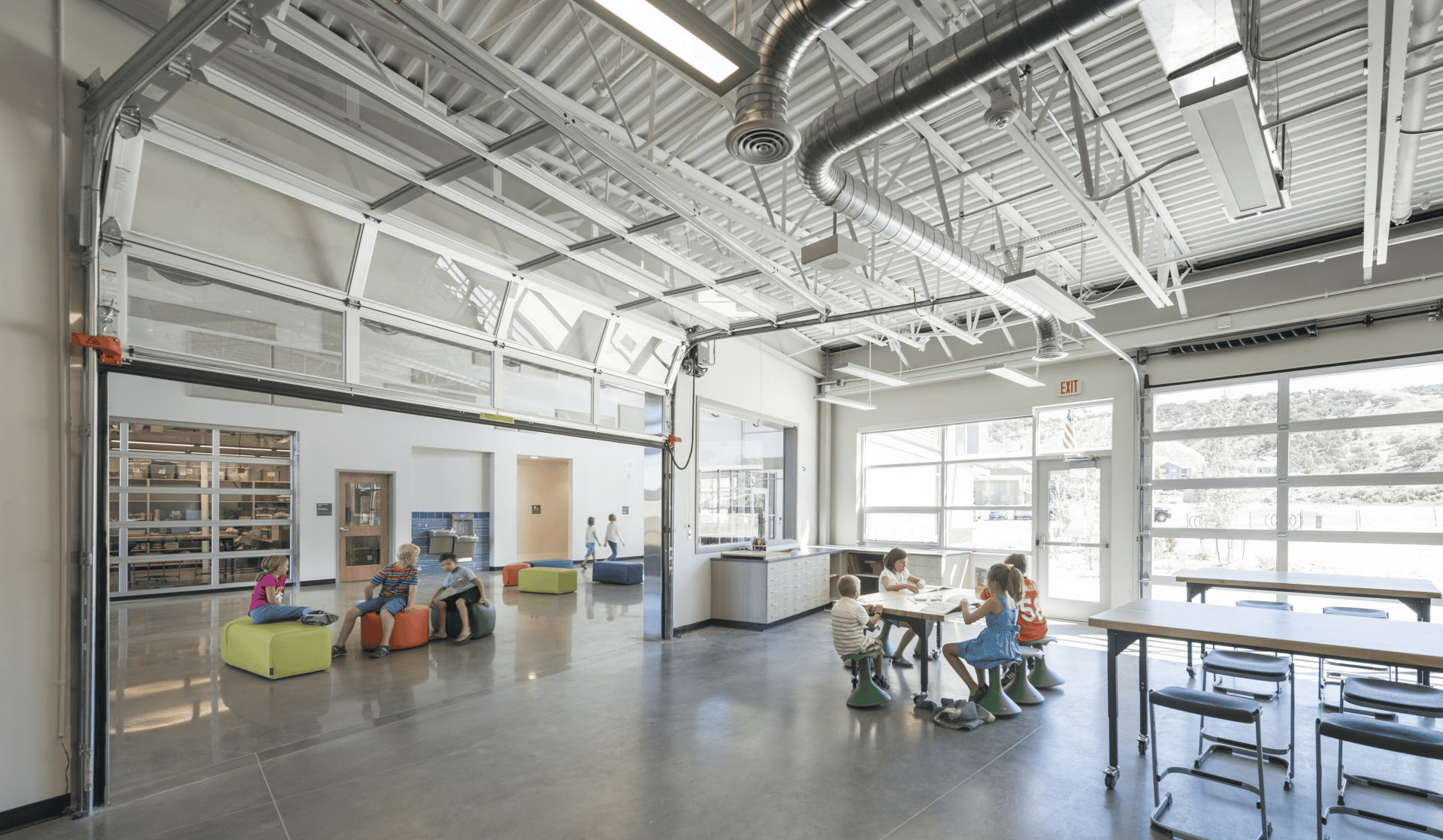
From the interior, direct connections to the outdoors through overhead doors or other large openings can provide connections to the natural world that encourage the transition between indoors and out.